


How Advantage Co., Ltd. Helps BOI Factories
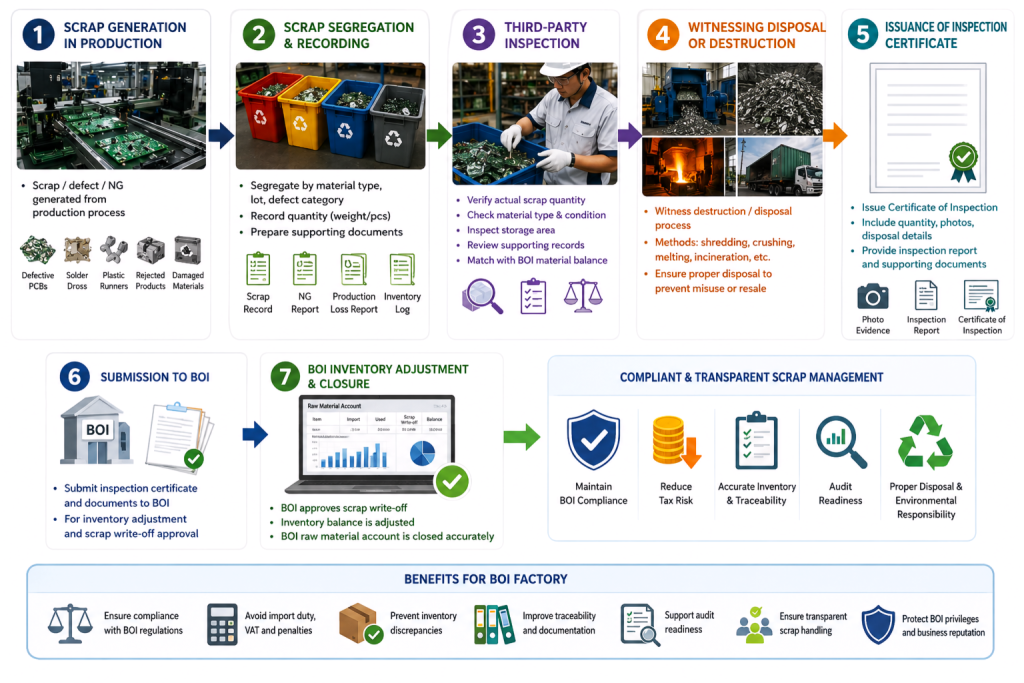
Advantage Co., Ltd. is an ISO/IEC 17020:2012 certified inspection company officially appointed by the BOI since 2006 to perform scrap inspection and verification services in Thailand. Services Provided by Advantage Scrap Quantity Verification Advantage inspectors verify: Witnessing Scrap Destruction The company monitors the destruction process to ensure compliance with BOI procedures and proper disposal methods. […]
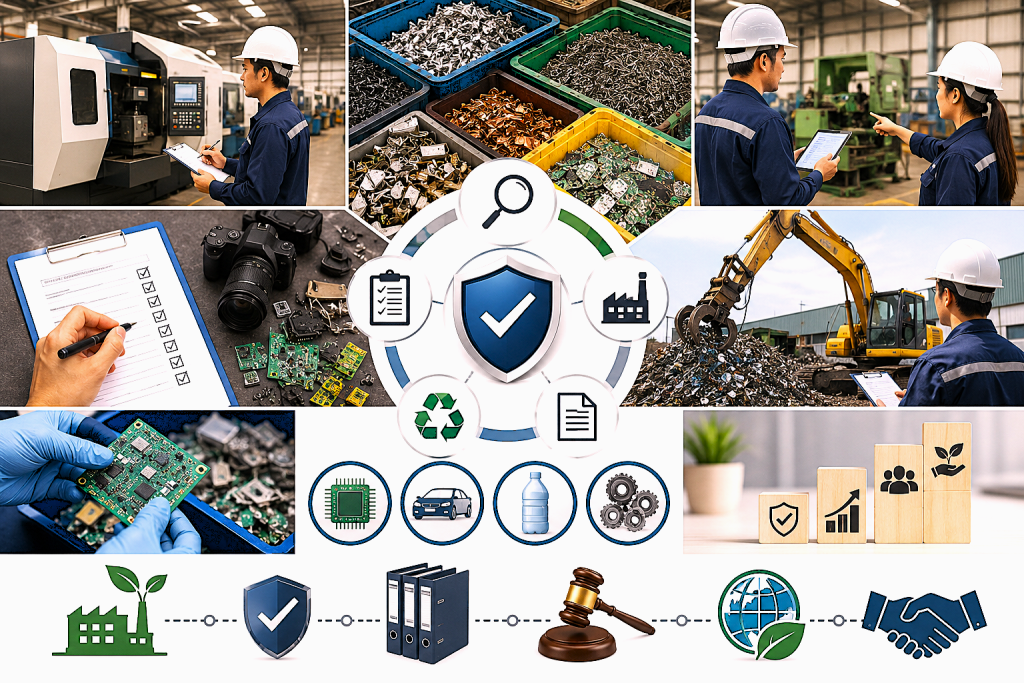
Advantage Co., Ltd. supports a wide range of industries requiring BOI compliance inspection services
PCB and Electronics Manufacturing PCB and electronic manufacturing generate multiple categories of regulated scrap, such as: These materials require proper verification and controlled disposal according to BOI and customs regulations. Automotive Manufacturing Automotive production facilities frequently manage: Accurate inspection helps ensure traceability and compliance with BOI inventory controls. Plastic Injection Molding Industry Plastic manufacturing operations […]
Offers Comprehensive Machine and Scrap Inspection to Ensure Strict Compliance with BOI Requirements
In Thailand’s highly regulated manufacturing environment, companies operating under Board of Investment (BOI) privileges must maintain strict control over imported machinery, production scrap, waste materials, and non-formula losses. Proper inspection, verification, and documentation are essential to ensure continued BOI compliance, avoid tax liabilities, and maintain transparency during audits and customs reviews. Advantage Co., Ltd. has […]
รายละเอียดการให้บริการในการตัดบัญชีส่วนสูญเสีย (Scrap) กับ BOI

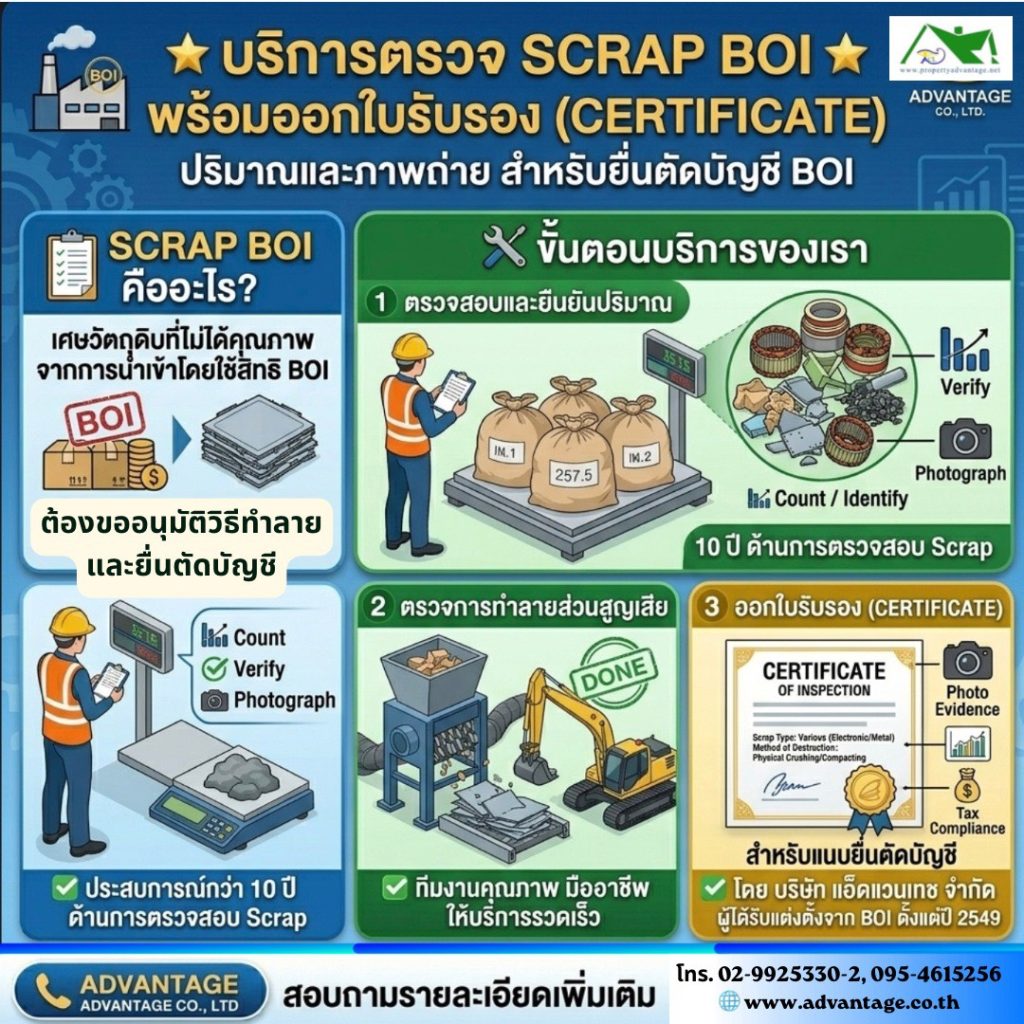
1. ขออนุมัติวิธีการทำลายส่วนสูญเสียกับ BOI (ทำครั้งแรกครั้งเดียว) กรณีเคยมีการอนุมัติแล้วไม่จำเป็นต้องขออนุมัติวิธีทำลายอีก 2. โรงงานเตรียมข้อมูลปริมาณส่วนสูญเสียที่ต้องการตัดยอด วางแผนวันทำลาย และนัดให้เจ้าหน้าที่มาตรวจขั้นตอนการตรวจปริมาณ เจ้าหน้าที่จะสุ่มตรวจปริมาณประมาณ 10 % ของรายการ ว่าเป็นไปตามข้อมูลที่โรงงานแจ้ง และถ่ายรูปการทำลายไว้เป็นหลักฐาน 3. บริษัท ฯ จะทำการส่ง draft report รับรองปริมาณมาให้หลังจากตรวจแล้วประมาณ 3 วัน 4. โรงงานสามารถทำเรื่องตัดยอดกับ BOI ได้เลย โดยใช้ใบ Certificate รับรองปริมาณ และหลักฐานการกำจัดแนบไปด้วย (กรณีขายเศษซากไม่ต้องใช้หลักฐานการกำจัด แต่จะต้องมีการเสียภาษี) *** หากบริษัทฯ ไม่ปฏิบัติตาม ข้อกำหนดของ BOI จะคงเหลือเป็นวัตถุดิบคงค้างในบัญชี Stockและจะต้องชำระภาษีอากรตามสภาพวัตถุดิบ ณ วันนำเข้า สำหรับวัตถุดิบคงเหลือเมื่อสิ้นสุดสิทธิการนำเข้าวัตถุดิบ*** บริการตรวจ Scrap BOI ออกใบรับรอง (Certificate) ปริมาณพร้อมภาพถ่าย สำหรับยื่นตัดบัญชี (BOI) บริษัท แอ็ดแวนเทช จำกัด […]
Major Causes of NG (Non-Good Defects) in Industrial Drilling Tools Manufacturing
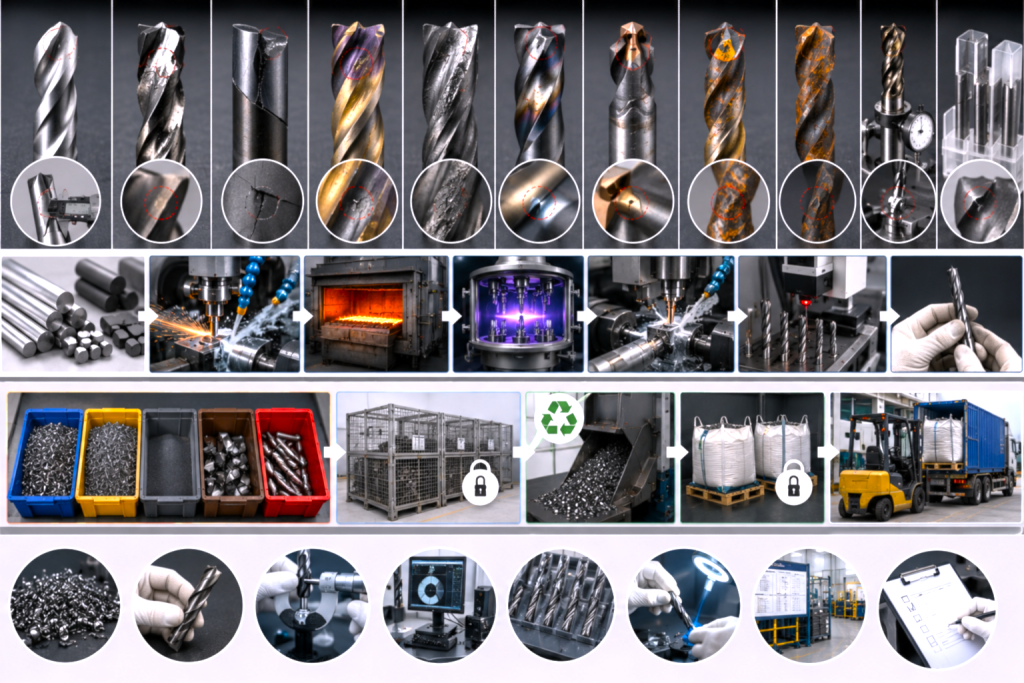
Industrial drilling tools are critical components used in automotive, aerospace, construction, oil & gas, electronics, and precision machining industries. These tools include drill bits, carbide drills, reamers, end mills, cutting inserts, countersinks, and high-precision machining tools. Because drilling tools operate under high speed, heat, pressure, and wear conditions, manufacturers must maintain extremely strict quality standards. […]
Major Causes of NG (Non-Good Defects) in Plastic Injection Manufacturing for Automotive Parts
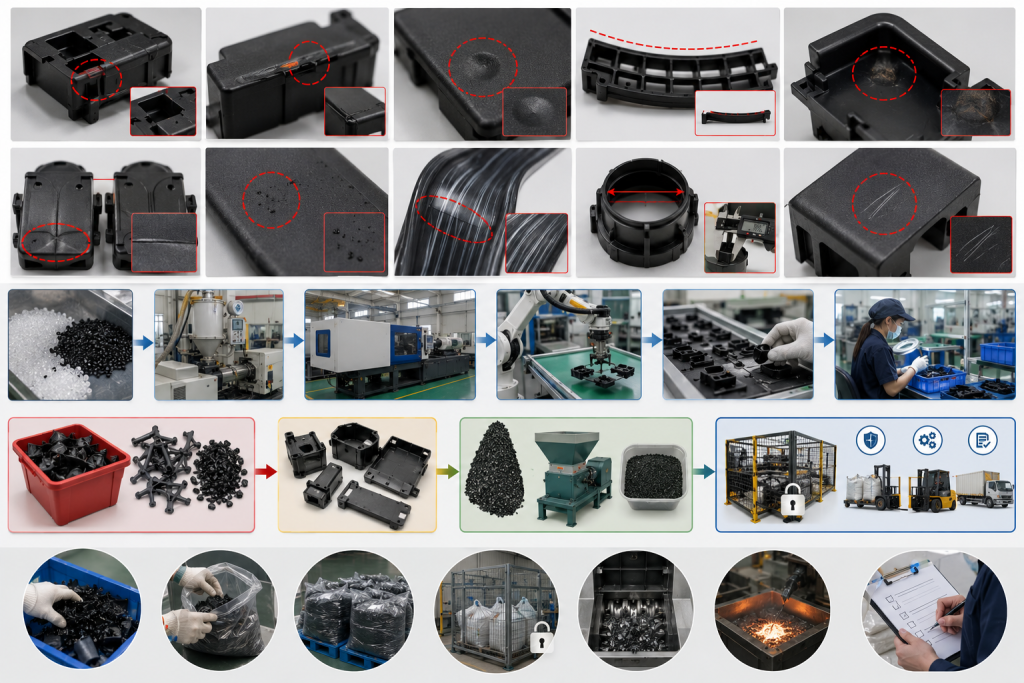
Plastic injection molding is one of the most important manufacturing processes in the automotive industry. It is widely used for producing interior parts, exterior components, connectors, housings, clips, air ducts, and precision engineering plastic parts. Because automotive parts require high precision, appearance quality, strength, and durability, strict quality control is essential. Any defect or NG […]
Major Causes of NG (Non-Good / Defects) in Automotive Exhaust System Manufacturing

Automotive exhaust system manufacturing involves multiple high-precision processes such as pipe bending, stamping, welding, forming, assembly, leak testing, coating, and inspection. Because exhaust systems operate under high temperature, vibration, pressure, and corrosion conditions, strict quality control is essential. Common NG (Non-Good) defects occur during production due to material problems, machine conditions, operator errors, welding issues, […]
Plastic Injection Molding Defects
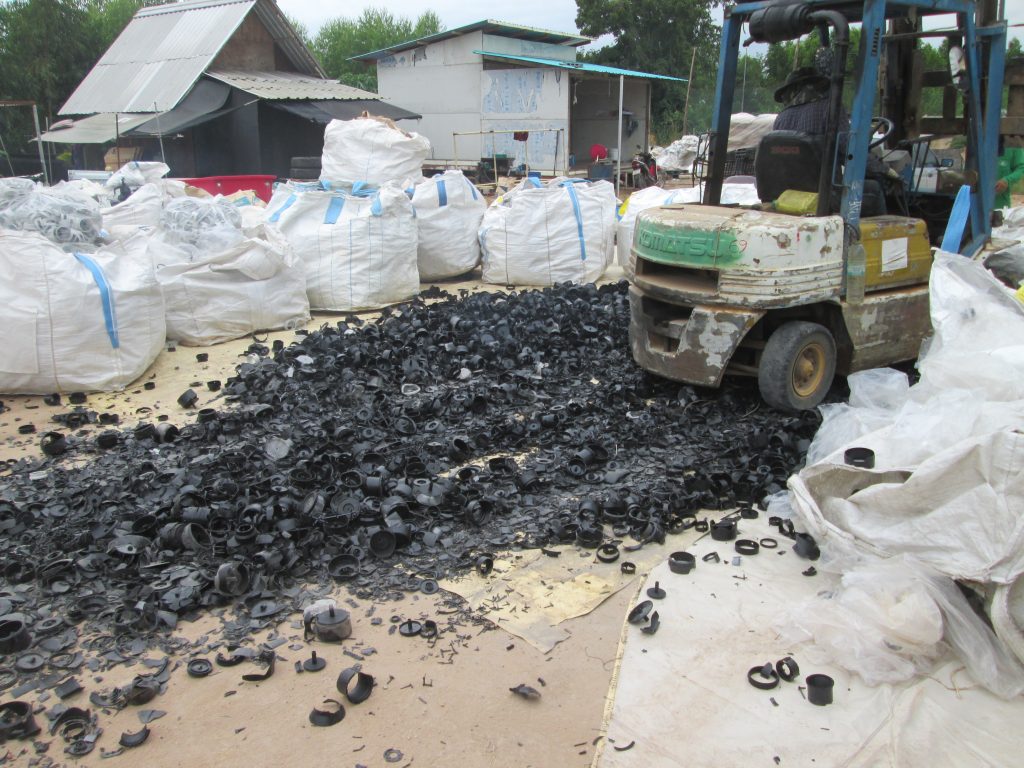
1. Plastic Injection Molding Defects Common Defects – Short shot – Flash – Sink marks – Warpage – Burn marks – Flow lines – Weld lines -Air traps -Black specks – Silver streaks – Bubbles/voids – Cracks Major Causes Material Issues – Moisture contamination in resin – Incorrect resin grade – Mixed or contaminated material […]
เศษหรือของเสียจากการกระบวนการผลิต ต้องดำเนินการอย่างไร
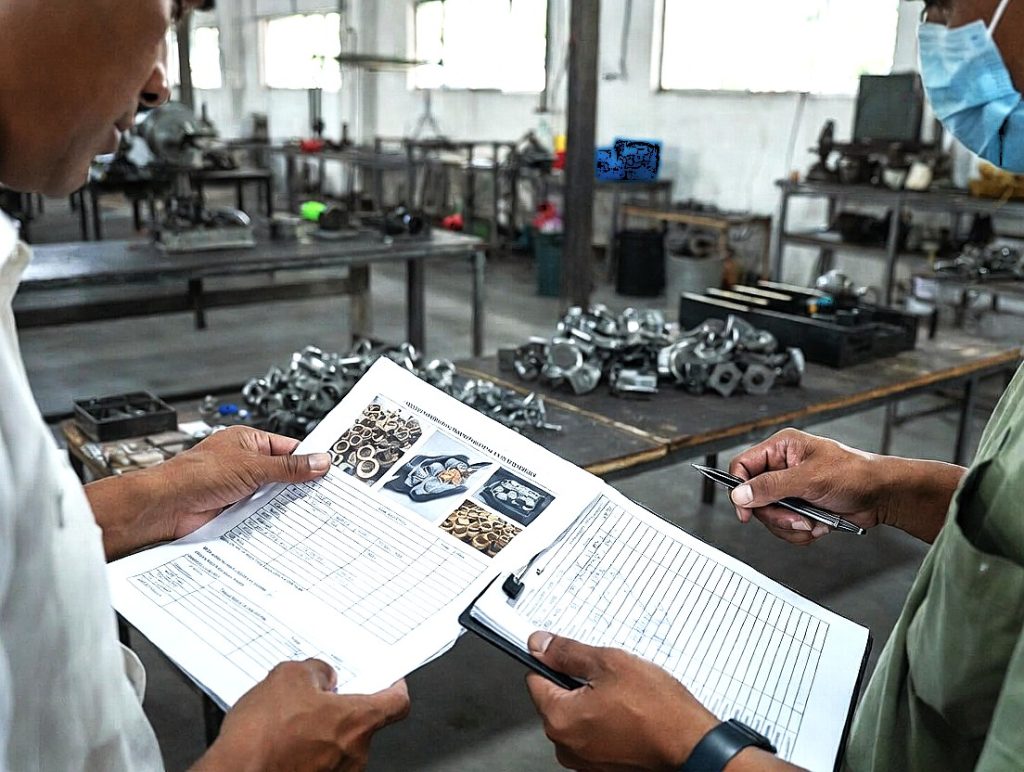
ทางบริษัทฯ ได้รับสิทธิตามมาตรา 36(1) โดยนำเข้าวัตถุดิบผ่าน BOI แล้วนำไปผลิตชิ้นส่วนพลาสติกโดยขายภายใต้ BOI จึงมีคำถามว่า เศษหรือของเสียจากการกระบวนการผลิต ต้องดำเนินการอย่างไร จำเป็นต้องส่งออกอย่างเดียวหรือไม่ ถ้าไม่ต้องดำเนินการอย่างไร ถ้าจะขาย scrap ภายในประเทศดำเนินการได้หรือไม่ ถ้าได้ต้องดำเนินการอย่างไร ส่วนสูญเสียของวัตถุดิบ แบ่งเป็น 2 ชนิดคือ 1. ส่วนสูญเสียในสูตร – รวมปริมาณการสูญเสียไว้ในสูตรการผลิตแล้ว – ไม่ต้องยื่นตัดบัญชีส่วนสูญเสีย เนื่องจากถูกตัดไปพร้อมกับการตัดบัญชีสินค้าตามใบขนหรือ report-v แล้ว – แต่เนื่องจากเศษซากยังอยู่ในประเทศ ดังนั้น หากเศษซากมีมูลค่าเชิงพาณิชย์ ต้องขอส่งออกต่างประเทศ หรือหากจะจำหน่ายในประเทศ ต้องขอชำระภาษีตามสภาพเศษซาก 2. ส่วนสูญเสียนอกสูตร – ไม่รวมปริมาณการสูญเสียไว้ในสูตรการผลิต – ต้องแยกเก็บ ห้ามปะปนกับส่วนสูญเสียในสูตร – ต้องขอส่งออกไปต่างประเทศ หรือหากไม่ส่งออก ต้องขอทำลายและชำระภาษีตามสภาพเศษซากหลังทำลาย จากนั้นจึงนำมาปรับยอด (ตัดบัญชีส่วนสูญเสียนอกสูตร) กรณีของบริษัท (A) ซื้อวัตถุดิบจากบริษัทที่ได้รับการส่งเสริมการลงทุน (B) และบริษัทตัดบัญชีวัตถุดิบเป็น report […]
Product Destruction Condition & Defect Status Verification for Electronic Scrap Inspection
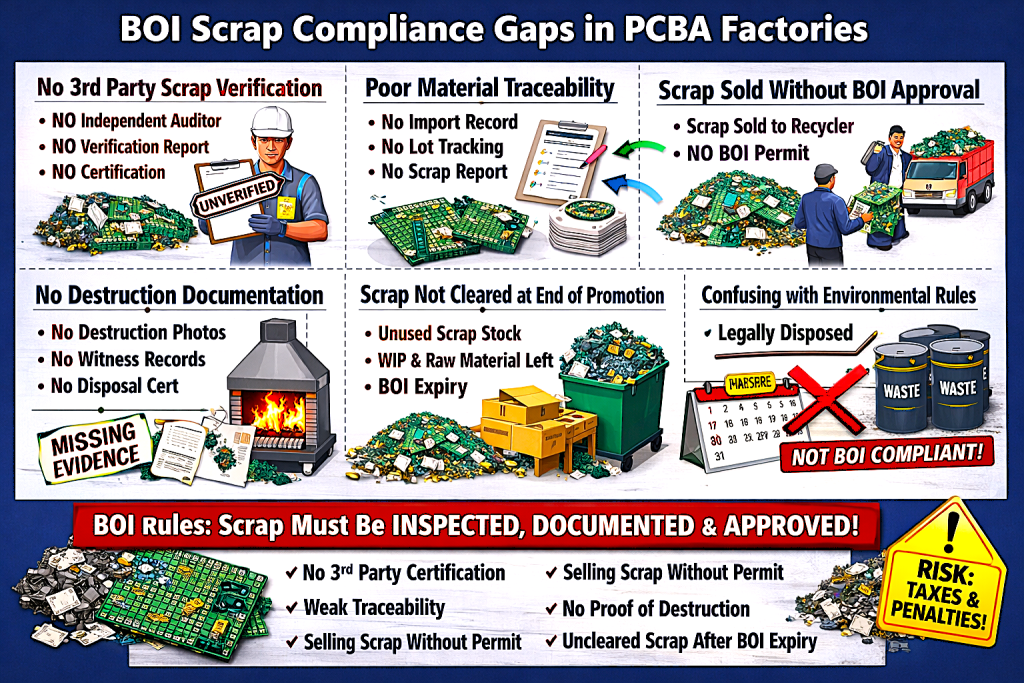
1. Product Destruction Condition Verification Product destruction condition verification is an important process during BOI Scrap Inspection to ensure rejected or defective electronic products cannot be reused, resold, repaired, or re-enter the market illegally. The destruction process must be visible, traceable, and properly documented. Objectives of Product Destruction Verification Common Product Destruction Methods for Electronic […]