


Advantage Co., Ltd. is an ISO/IEC 17020:2012 certified inspection company officially appointed by the BOI since 2006 to perform scrap inspection and verification services in Thailand.
Services Provided by Advantage
Scrap Quantity Verification
Advantage inspectors verify:
- Actual scrap quantities
- Weight measurements
- Production loss consistency
- NG product records
Witnessing Scrap Destruction
The company monitors the destruction process to ensure compliance with BOI procedures and proper disposal methods.
Inspection Reports and Certificates
Advantage issues official documents including:
- Inspection certificates
- Photo records
- Scrap verification reports
- Supporting compliance documents
These documents help factories submit accurate BOI inventory deductions.
In Thailand, factories promoted by the Thailand Board of Investment (BOI) receive privileges such as duty-free import of raw materials and machinery. However, when production creates scrap, waste, defective goods, or unusable materials, the factory must properly record, inspect, and dispose of those materials according to BOI regulations.
What is BOI Scrap?
BOI Scrap refers to:
- Defective raw materials
- Production waste
- Rejected finished goods
- Expired materials
- Non-formula loss materials
- NG (No Good) products
- PCB scrap, solder dross, metal scrap, plastic runners, etc.
These materials cannot simply be discarded or sold without proper approval because they were imported under BOI tax privileges.
Why Scrap Inspection is Important
Without proper inspection and certification:
- The BOI may treat remaining materials as taxable stock
- The factory may need to pay import duty and VAT
- BOI privileges may be affected
- Inventory records may not match actual production losses
- The company may face compliance issues during audits
The inspection process helps factories legally deduct scrap quantities from their BOI raw material accounts.
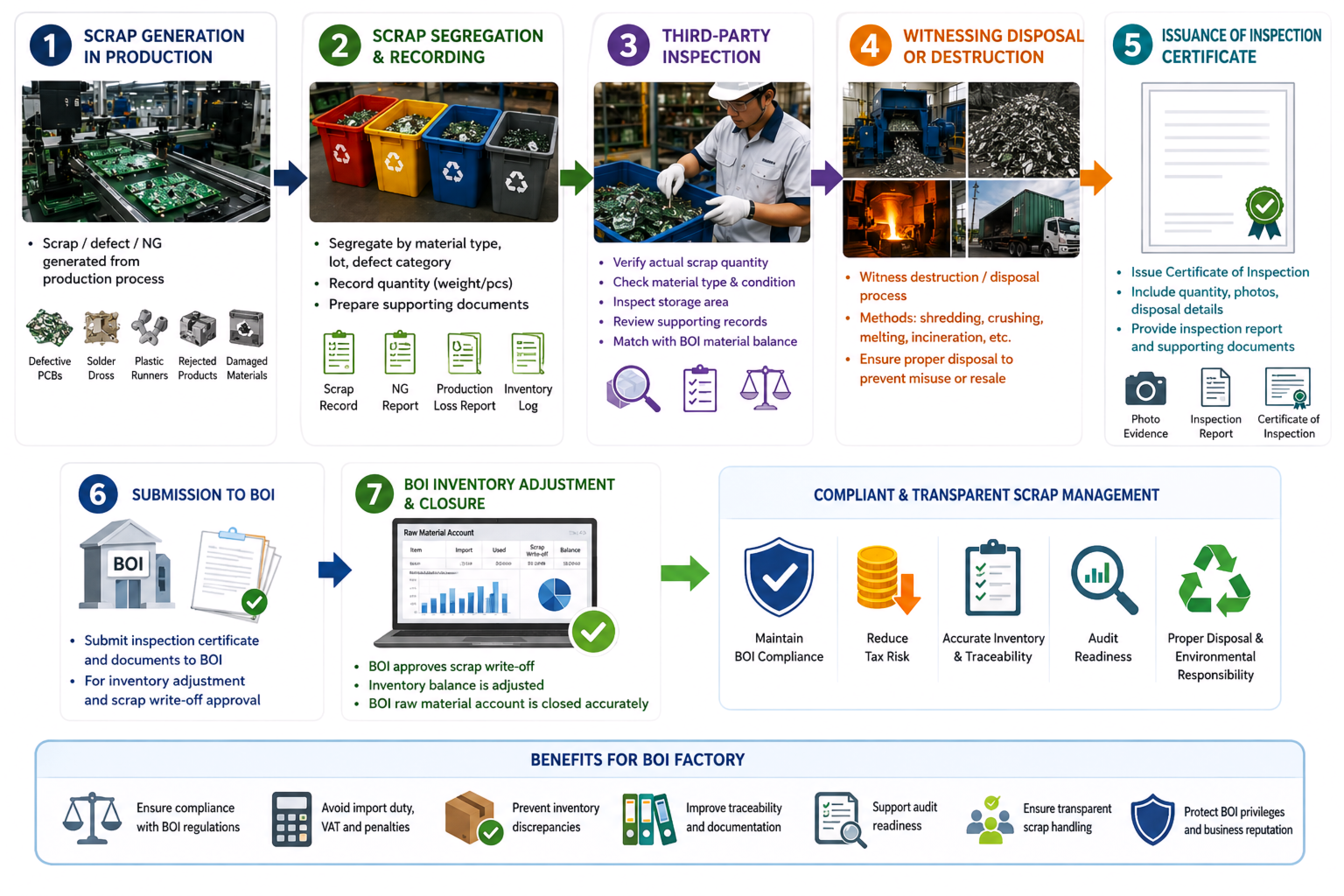
Typical Scrap Inspection Process in Thailand
1. Scrap Generation in Production
Scrap is generated during manufacturing processes such as:
- PCB manufacturing
- Plastic injection molding
- Metal stamping
- Electronics assembly
- Automotive parts production
Examples include:
- Rejected PCBs
- Defective components
- Excess solder paste
- Plastic runners
- Damaged packaging
- Off-spec products
2. Scrap Segregation and Recording
The factory separates scrap materials by:
- Material type
- Production lot
- Defect category
- Weight or quantity
Factories usually maintain:
- Scrap records
- NG reports
- Production loss reports
- Material inventory logs
- BOI stock balance records
3. Witnessing Disposal or Destruction
Depending on BOI requirements, the inspector may witness:
- การทำลาย
- Crushing
- Shredding
- Melting
- Export preparation
- Transfer to licensed recyclers
This prevents misuse or unauthorized resale of duty-free materials.
4. Issuance of Inspection Certificate
After verification, the inspection company issues:
- Certificate of Inspection
- Quantity verification report
- Photo evidence
- Disposal confirmation records
These documents are submitted to the BOI for:
- Inventory adjustment
- Tax settlement
- Scrap write-off approval