


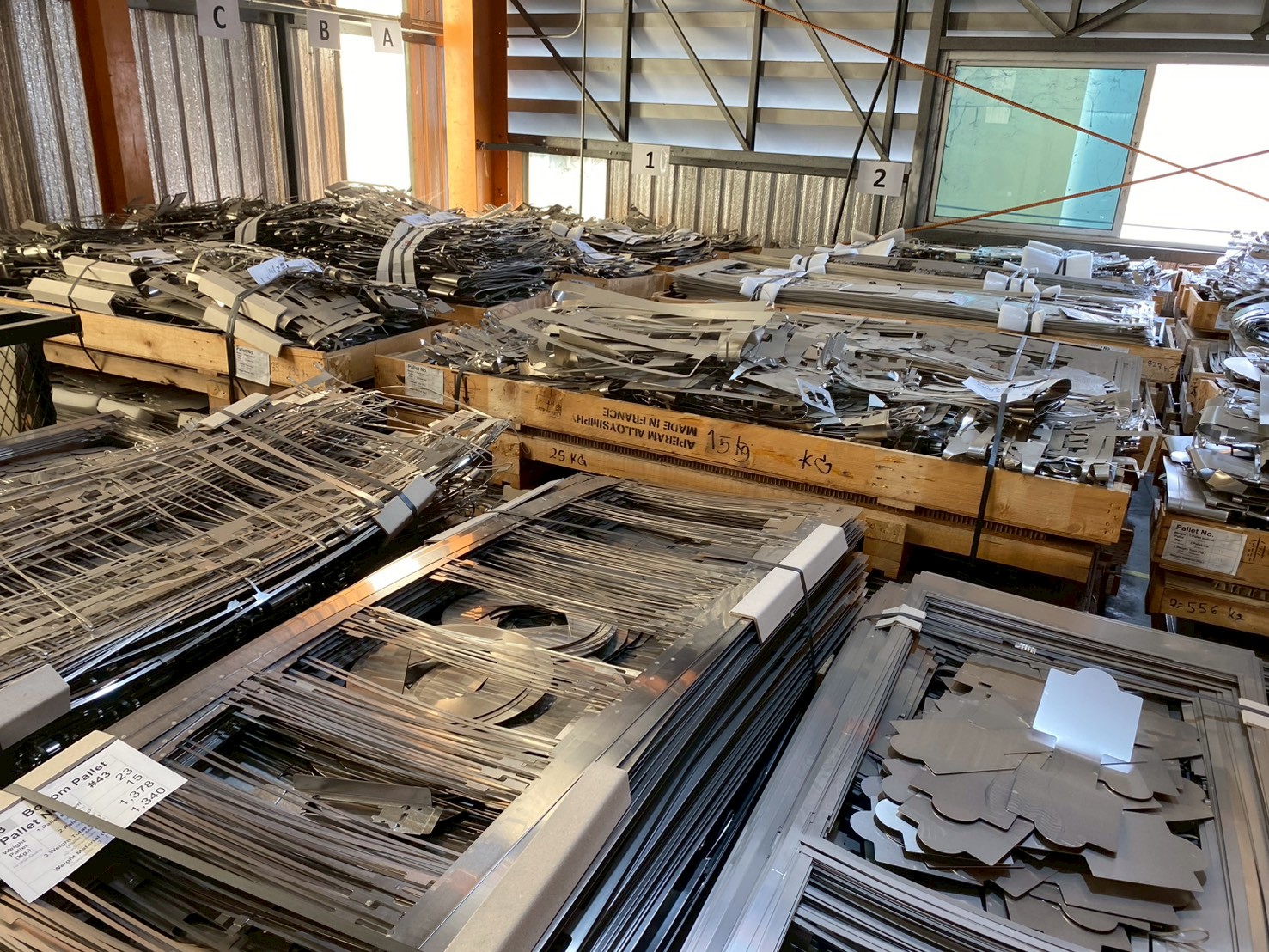
Magnetic shielding products made from high-permeability alloys like Mu-metal, Permalloy, or similar nickel-iron materials play a critical role in protecting sensitive electronics from electromagnetic interference (EMI) and radio frequency interference (RFI). These shields appear in medical equipment, aerospace components, automotive sensors, audio devices, and industrial electronics.
In Thailand’s growing manufacturing sector — with many facilities in Pathum Thani, Chonburi, and other industrial estates — fabricators often import expensive Mu-metal sheets or foils and perform local cutting, forming, and finishing. However, high material costs combined with process challenges frequently lead to significant scrap (material waste) and NG (Not Good/rejected parts). Understanding the main problem areas helps manufacturers cut costs, improve yield, and stay competitive.
Major Sources of Scrap: The Cutting and Press Shop Area
The largest volume of raw material waste typically occurs in the cutting, shearing, stamping, or punching processes within the press shop or blanking area.
Major Sources of NG (Rejects): Forming and Heat Treatment Areas
While scrap eats into material, NG parts that fail final quality checks often stem from two downstream processes:
- Deep Drawing and Forming (Forming Press Area) Many shielding products are deep-drawn cans, cylinders, or complex enclosures. Mu-metal work-hardens rapidly during cold forming, leading to common defects such as:
- Wrinkling on flanges or walls
- Tearing or splitting
- Thinning (especially at corners)
- Earing and spring-back
- Surface scratches from poor lubrication or tooling
Final Magnetic Annealing / Heat Treatment (Heat-Treatment Room) This step proves the biggest culprit for NG that only appears during final magnetic performance testing. After any mechanical processing (cutting, forming, welding, or machining), parts require high-temperature annealing — typically 1,100–1,180°C in a controlled hydrogen or vacuum atmosphere — followed by slow, controlled cooling.
The goal is to relieve stresses, recrystallize the grain structure, and restore maximum magnetic permeability. Failures here include:
- Oxidation or surface contamination (if atmosphere control is inadequate)
- Warping or distortion
- Excessive grain growth
- Incomplete stress relief leading to poor shielding performance