


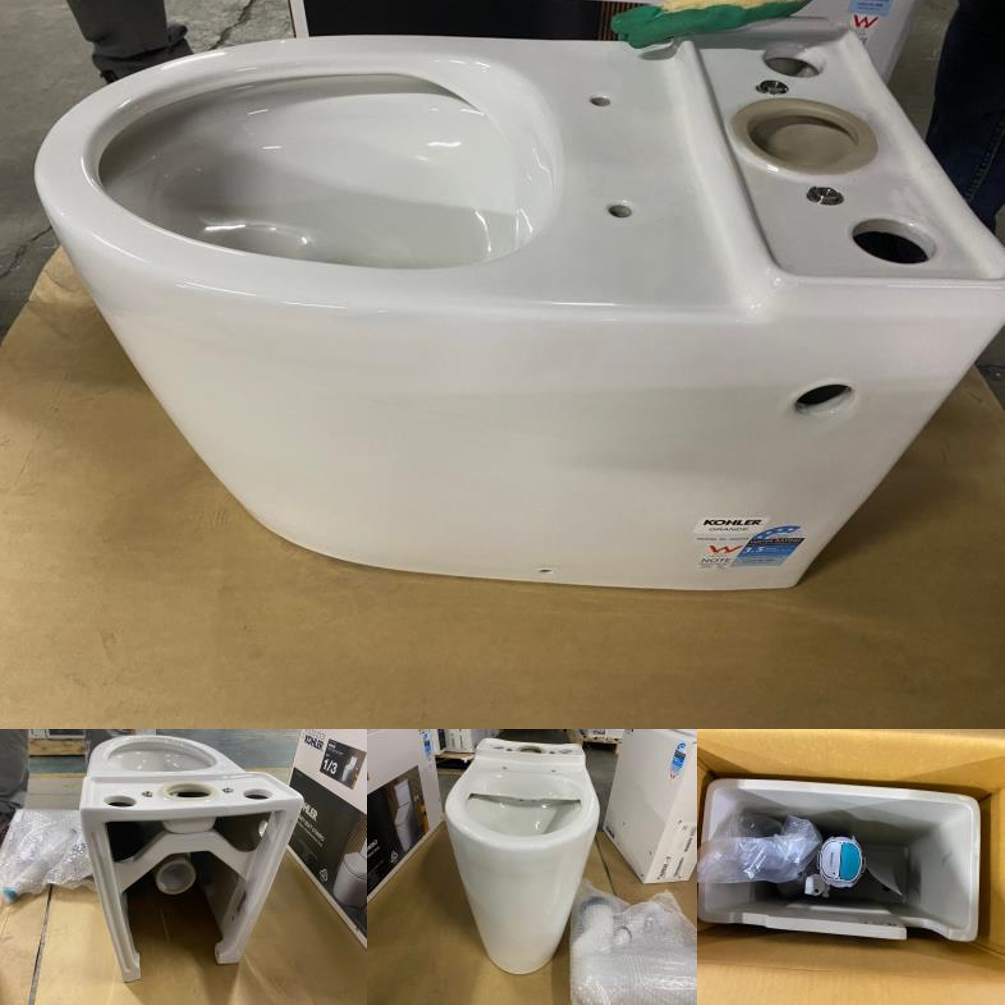
Why High-Tech Toilet Inspection Is Critical
1. Water + Electricity = Serious Risk
Smart toilets mix water, heat, and 110–240V electricity inside a bathroom. Any defect can cause:
- Electric shock to the user
- Short circuit and fire hazard
- Water leakage damaging floors and subfloors
Inspection verifies proper sealing, insulation, and grounding.
2. Complex Components Fail Often
A standard toilet has no moving parts. A smart toilet has:
- Water pumps
- Heating elements
- Solenoid valves
- Control boards
- Sensors (pressure, temperature, motion)
- Motors (lid, dryer fan)
Each component is a potential failure point. Inspection catches defects early.
3. Installation & Fit Issues
High-tech toilets must fit existing bathroom plumbing and electrical. Common problems:
- Water supply hose too short or wrong thread
- Electrical cord not reaching outlet
- Bowl and seat misalignment
- Missing mounting hardware
4. High Value = High Expectation
Consumers pay $300–$3,000 for a smart toilet. They expect perfection. Any defect leads to:
- Negative reviews (Amazon, Wayfair, Home Depot)
- Costly returns (heavy, awkward to ship back)
- Chargebacks and refunds
What Is Checked During Inspection?
Inspectors perform a comprehensive check across five categories: visual, mechanical, electrical, water function, and packaging.
1. Visual & Ceramic Check
| Checkpoint | Criteria |
|---|---|
| Bowl & tank | No cracks, chips, or glaze defects |
| Seat & lid | No scratches, warping, or discoloration |
| Nozzle | Clean, extends/retracts smoothly, no cracks |
| Remote control | Buttons responsive, LCD clear, backlight works |
| Labels & markings | Voltage, model, certification marks (UL, CE, ETL, GS) present |
2. Mechanical & Assembly Check
| Checkpoint | Criteria |
|---|---|
| Seat hinge | Smooth open/close, stays in position |
| Lid auto open/close | Sensor detects motion, soft-close works |
| Nozzle movement | Extends fully, retracts completely, no grinding |
| Mounting hardware | Bolts, washers, brackets all present |
| Water hose & fittings | No kinks, brass threads, rubber washers intact |
3. Electrical Safety Test
| Test | Method | Pass Criteria |
|---|---|---|
| Ground continuity | Multimeter from plug ground pin to exposed metal | <0.1 ohm |
| Leakage current | Hi-pot tester at 1500V | No breakdown, <0.75mA leakage |
| Insulation resistance | 500V megger | >10 MΩ |
| Cord strain relief | Pull 60 lbs for 1 minute | No displacement, no exposed wires |
4. Water & Function Test (Critical)
Inspectors connect the toilet to water and power supply (simulating real installation).
| Test | Method | Pass Criteria |
|---|---|---|
| Water leak test | Run bidet wash for 2 minutes, inspect all connections | Zero drips or leaks |
| Water pressure | Adjust pressure settings (low/medium/high) | Spray pattern consistent, no sputtering |
| Water temperature | Set to 38°C, measure at nozzle | Reaches temp within 30 seconds, stable ±2°C |
| Heated seat | Set to 35°C, measure after 2 minutes | Warms evenly, ±3°C |
| Dryer | Run for 60 seconds | Air warm, fan quiet (<55 dB) |
| Auto flush | Stand up / wave hand / press button | Flush activates, completes full cycle |
| Auto lid | Approach sensor | Opens within 1 meter, closes after delay |
| Deodorizer | Run fan, smell test | Air exhausts, no odor escape |
| Remote control | All buttons tested from 3 meters | 100% response |
5. Packaging Check
| Checkpoint | Criteria |
|---|---|
| Carton strength | Double-wall corrugated, foam or EPS protection |
| Poly bag warnings | Suffocation label if bag thickness <0.038mm |
| Manual | Language matches destination, installation diagrams clear |
| Accessories | Mounting bolts, wax ring, water supply hose, batteries for remote |
| Certification label | UL / ETL / CE / SAA mark visible |
Common Defects Found During Inspection
| Defect | Why It Happens | Severity |
|---|---|---|
| Water leak at hose connection | Missing or damaged rubber washer | Critical |
| Nozzle does not retract | Jammed mechanism or bad motor | Major |
| Water not heating | Failed heating element or thermostat | Major |
| Ground continuity fails | Loose ground wire or missing connection | Critical |
| Remote control unresponsive | Dead battery or bad IR sensor | Major |
| Seat crack near hinge | Poor molding or overtightened bolt | Major |
| Auto flush sensor ignores hand wave | Sensor out of calibration | Minor/Major |
| Ceramic glaze bubble | Poor firing process | Minor |
Inspection Standards & AQL
High-tech toilet inspection follows AQL sampling (ANSI/ASQ Z1.4, ISO 2859):
| Defect Class | Examples | AQL Limit |
|---|---|---|
| Critical | Water leak, electric shock risk, exposed wires, no grounding | 0% |
| Major | No heat, nozzle stuck, auto flush fails, missing parts | 1.0% |
| Minor | Scratch on seat, remote button stiff, packaging scuff | 2.5% |
Special function tests (water temp, dryer, auto lid) follow S-2 sampling level.
When Should You Inspect?
- Pre-production – Verify component quality (heater, pump, control board)
- During production – Monitor assembly line, torque checks, water test station
- Pre-shipment (PSI) – Final random sample before packing into containers
Critical recommendation: For high-tech toilets, require 100% functional water testing at the factory before packing. Many defects only appear when water flows.