


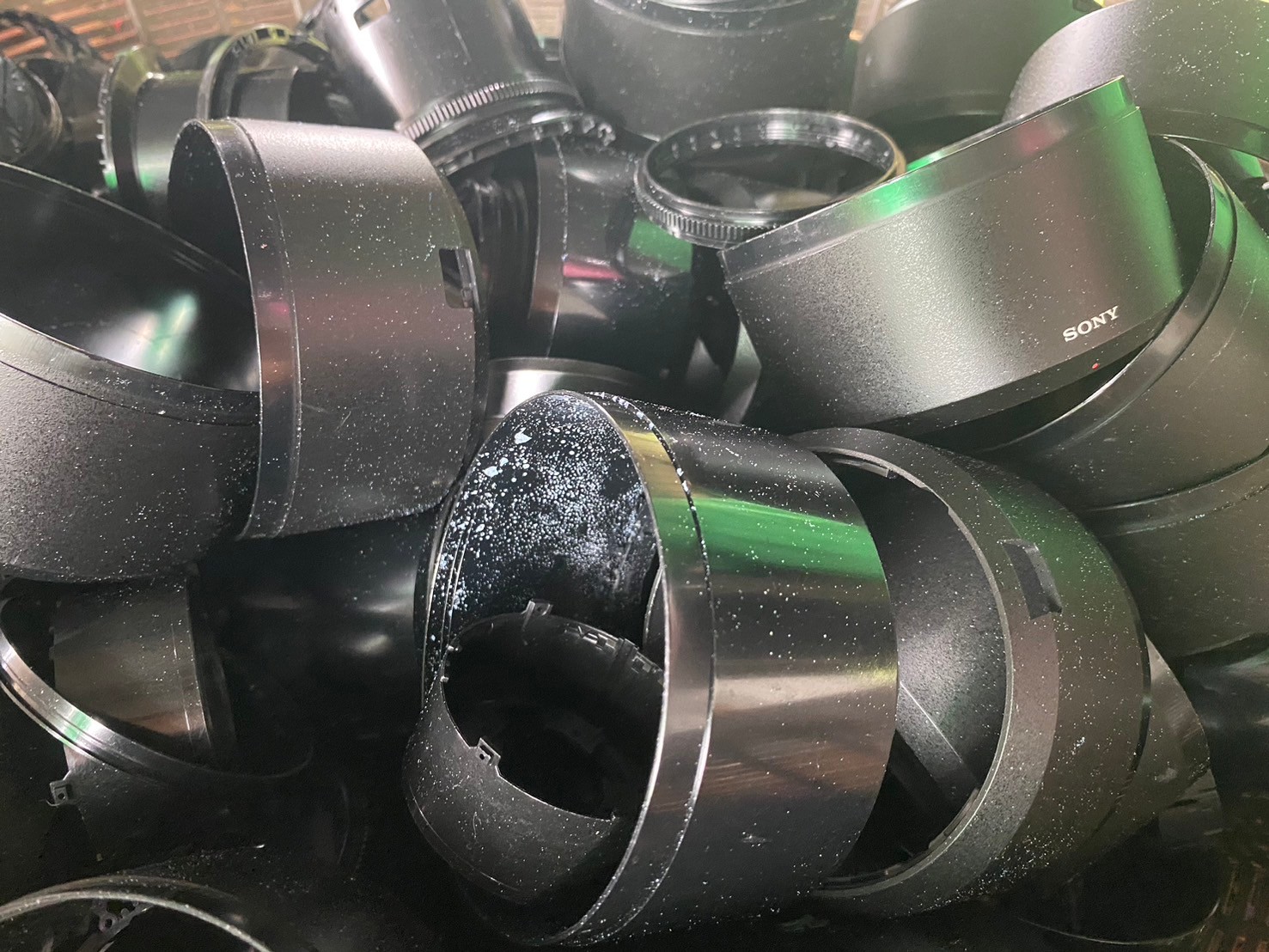
Plastic injection molding is a cornerstone of Thailand’s manufacturing industry. With major hubs in Pathum Thani, Chonburi, and the Eastern Economic Corridor, Thai factories produce components for automotive parts, electronics housings, medical devices, consumer goods, and packaging.
Major Source of Scrap: The Injection Molding Machine Area (Production Floor) + Material Preparation Area
The largest volume of material waste in most Thai injection molding plants occurs right at the heart of production — the molding machine area — and starts earlier in the material preparation (drying and mixing) area.
Reasons and typical scrap generators:
- Cold runner systems: In conventional molds, the runner and sprue solidify with every shot and become scrap unless perfectly reground.
- Purging and color/material changeovers: Frequent job changes (typical in contract manufacturing) require purging the barrel and screw. Poor purging technique or degraded material creates large amounts of unusable purge waste.
- Startup and shutdown shots: First shots after setup, weekend restarts, or power interruptions (common in industrial estates) are often discarded as unstable.
- Moisture-related waste in the drying area: Thailand’s high humidity (especially in Pathum Thani) makes hygroscopic resins like PA, PC, PET, and ABS absorb moisture quickly. Wet material leads to splay, bubbles, or degradation — forcing operators to purge large quantities or discard contaminated batches.
- Excess flash and regrind overflow: Over-packing or worn molds create flash that must be trimmed and often cannot be fully reused.
Major Source of NG (Rejects): The Injection Molding Machine Area (Production Floor), Rooted in Material Preparation and Mold Maintenance Areas
While defects are physically created during the molding cycle, the root causes are usually traced to two upstream areas: material preparation and mold maintenance/tool room. NG parts are only confirmed in the QC/inspection area, but by then the cost has already been incurred.
Most common NG defects and their primary factory areas:
- Material Preparation Area (Drying & Hopper Loading) – Biggest hidden cause of NG
- Moisture in resin → splay marks, silver streaks, voids, bubbles, brittleness, and surface defects.
- Contamination or incorrect dosing of regrind/masterbatch → color streaks, delamination, or inconsistent shrinkage.
- In Thailand’s humid climate, improper dryer settings or open hoppers quickly turn good material into NG sources.
- Mold Maintenance / Tool Room Area
- Worn or poorly maintained molds → flash, short shots, ejector marks, and sticking parts.
- Inadequate venting, unbalanced runners, or damaged cooling channels → burn marks, warpage, sink marks, and flow lines.
- Many Thai plants run high-cavity molds for cost efficiency; even minor wear on parting lines or guide pins creates consistent rejects.
- Injection Molding Machine Area (Process Setting & Operation)
- Incorrect parameters (injection pressure/speed, packing pressure, cooling time, mold temperature) → short shots, sink marks, warpage, jetting, and flash.
- Worn screw, barrel, or check valve → inconsistent melt quality, leading to voids, discoloration, or dimensional instability.
- Uneven clamping force or machine misalignment → flash and parting-line defects.