


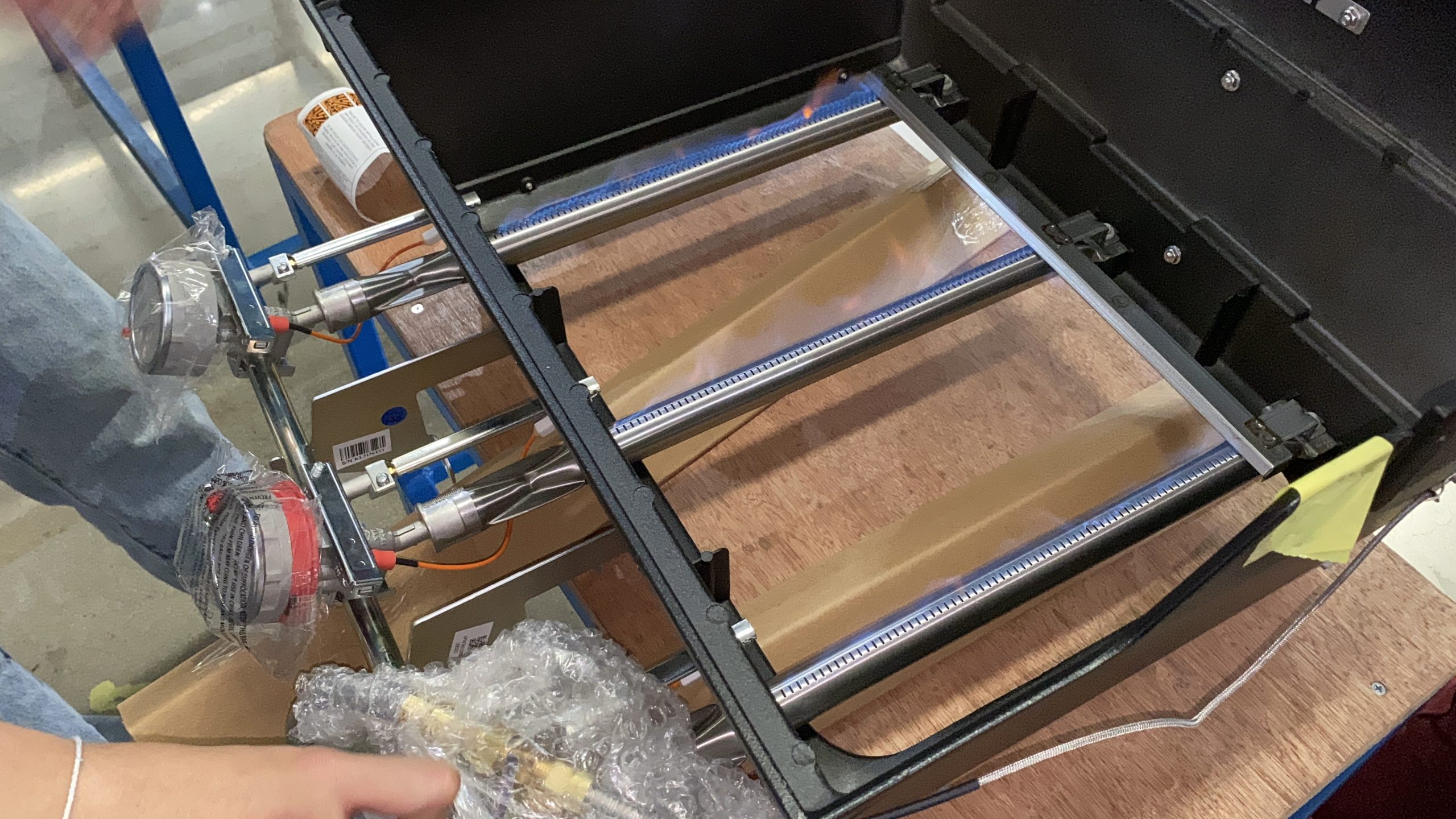
Performing a Pre-Shipment Inspection (PSI) for a Gas BBQ is critical because these products sit at the intersection of gas safety, outdoor durability, and high consumer expectations (assembly, cosmetics, cooking performance)
1. Critical: Gas Safety & Leakage
This is the highest priority. A gas leak can cause explosions or fires.
- Gas Circuit Integrity: The inspector must verify that all gas connections (valve, regulator, hose, burner jets) are tightened to the specified torque. Hand-tight connections are a common failure.
- Leak Testing: Perform a leak test using a gas sniffer or soapy water solution on every connection while gas is flowing under pressure.
- Flame Characteristics: Light all burners. Check for:
- Flashback: Flame burning inside the burner tube (dangerous).
- Yellow tipping: Indicates incomplete combustion (high CO emissions).
- Light-back: Ignition occurring at the wrong point.
- Regulator & Hose: Verify the regulator matches the target market (e.g., Propane vs. Natural Gas, UK vs. EU vs. US thread standards). Check for kinks or damage to the hose.
2. Assembly & Functionality
Most gas BBQs are sold as semi-assembled (boxed). The inspection must simulate the end-user experience.
- Assembly Fit: inspector assembles a sample, they must check if holes align, screws thread easily, and tools are required (no missing pre-drilled holes).
- Ignition System: Test every burner multiple times.
- Electronic ignition: Must spark consistently without cross-sparking to other burners.
- Battery polarity: Check if batteries are installed correctly (if pre-installed) and if the protective film is removed.
- Gas Valve Knobs: Must turn smoothly, with distinct stops (Off/Low/High). Knobs must not be melted or warped after burn testing.
- Side Burners: If applicable, test side burner ignition and flame stability, especially with the lid of the main grill closed (wind interference).
3. Cosmetic & Surface Treatment (Durability)
BBQs live outdoors. Poor finishing leads to rust within weeks.
- Stainless Steel Grade: Verify using a magnet or PMI (Positive Material Identification) if possible. 430 (magnetic) is cheaper and rusts faster than 304 (non-magnetic). Check for “rust bloom” (surface rust from iron contamination during manufacturing).
- Powder Coating: Check for bare spots, fish eyes, or thin coverage on cart legs and side shelves. Focus on welded joints—these are the first places rust appears if post-weld cleaning was poor.
- Glass & Plastic: Check side shelves and handlebars for warping (caused by heat during transit or curing) and color consistency.
4. Mechanical Integrity & Hardware
- Wheel & Axle: The axle must be secured (e.g., cotter pins or locking washers). Wheels should roll without wobbling. Brakes (if any) must hold the unit on an incline.
- Hardware Kit: Verify that screws, washers, and tools are packed in a sealed bag with a clear label. Missing hardware is a top consumer complaint.
- Structural Weld: Check for pinhole welds or incomplete penetration on the firebox and cart legs.
5. Cooking Performance & Components
- Cooking Grids: Check material (cast iron, porcelain-coated, stainless).
- Cast iron: Must be coated with food-grade oil to prevent rust during transit. If there is bare metal showing (scratches), reject.
- Porcelain: Check for “crazing” (cracks in the enamel) or chips on the edges.
- Heat Distribution: Look for warped burner tubes or heat tents. If the unit is assembled, ensure the thermometer (if equipped) reads accurately after 10 minutes of burn.
- Grease Management: The grease tray and drip pan must slide in/out easily without sticking. If the tray is aluminum foil, ensure it is present and not torn.