


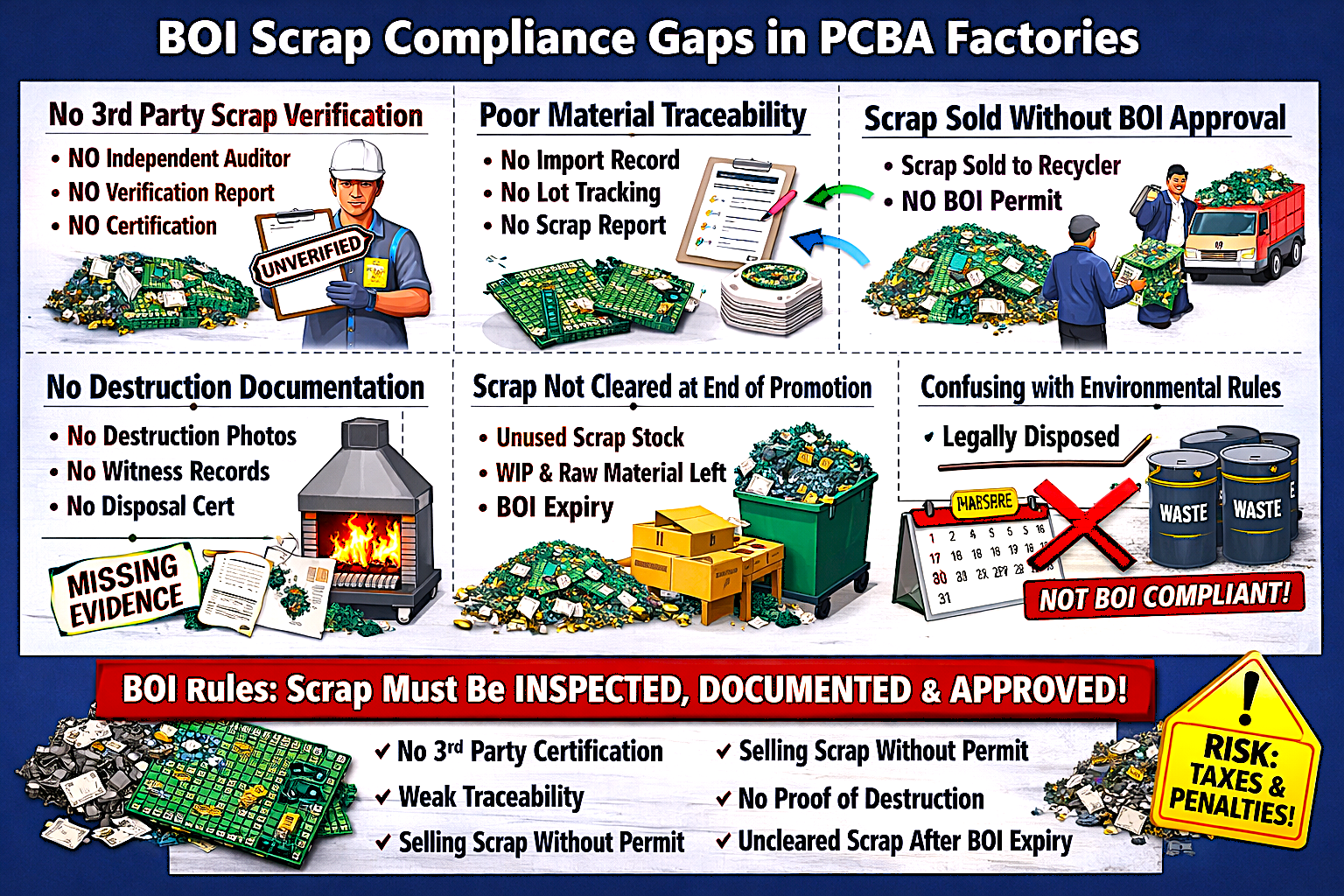
1. ❗ Not performing third-party scrap verification
Many factories record scrap internally but forget that BOI usually requires independent inspection and certification of losses or destruction.
- Scrap quantity and type must be verified by an accredited inspector
- Destruction or disposal often must be witnessed
- Certification is required for stock write-off and tax settlement
Without this, unused materials may be treated as taxable stock and BOI benefits can be revoked.
2. ❗ Poor traceability between imported material and scrap
Factories often fail to maintain:
- Material balance reports
- Lot-based tracking of imported duty-free materials
- Scrap yield vs production records
BOI expects proof that scrap truly comes from imported BOI-privileged materials, otherwise authorities may assume diversion or misuse.
3. ❗ Forgetting to obtain BOI approval before disposal/sale
Many factories sell scrap locally or send it to recyclers without prior approval.
However, BOI controls scrap to prevent:
- Untaxed resale of duty-free materials
- Transfer of materials outside BOI control
Scrap must be inspected and approved before sale, export, or disposal.
4. ❗ Missing documentation for destruction process
BOI usually expects:
- Photos of destruction
- Witness records
- Disposal certificates
- Scrap measurement reports
Factories often destroy materials but forget to keep formal evidence, making BOI stock clearance impossible later.
5. ❗ Not settling scrap at end of promotion period
When BOI privileges end, factories must reconcile:
- Remaining imported raw materials
- Work-in-process
- Scrap and losses
If scrap is not verified and cleared, duties/taxes may be applied retroactively.
6. ❗ Confusing environmental compliance with BOI compliance
Factories think that:
“We already disposed scrap legally under DIW/environmental law”
But BOI compliance is different.
BOI focuses on:
- Tax privilege control
- Material accountability
- Prevention of duty-free misuse
So environmental disposal alone is not sufficient for BOI purposes.