


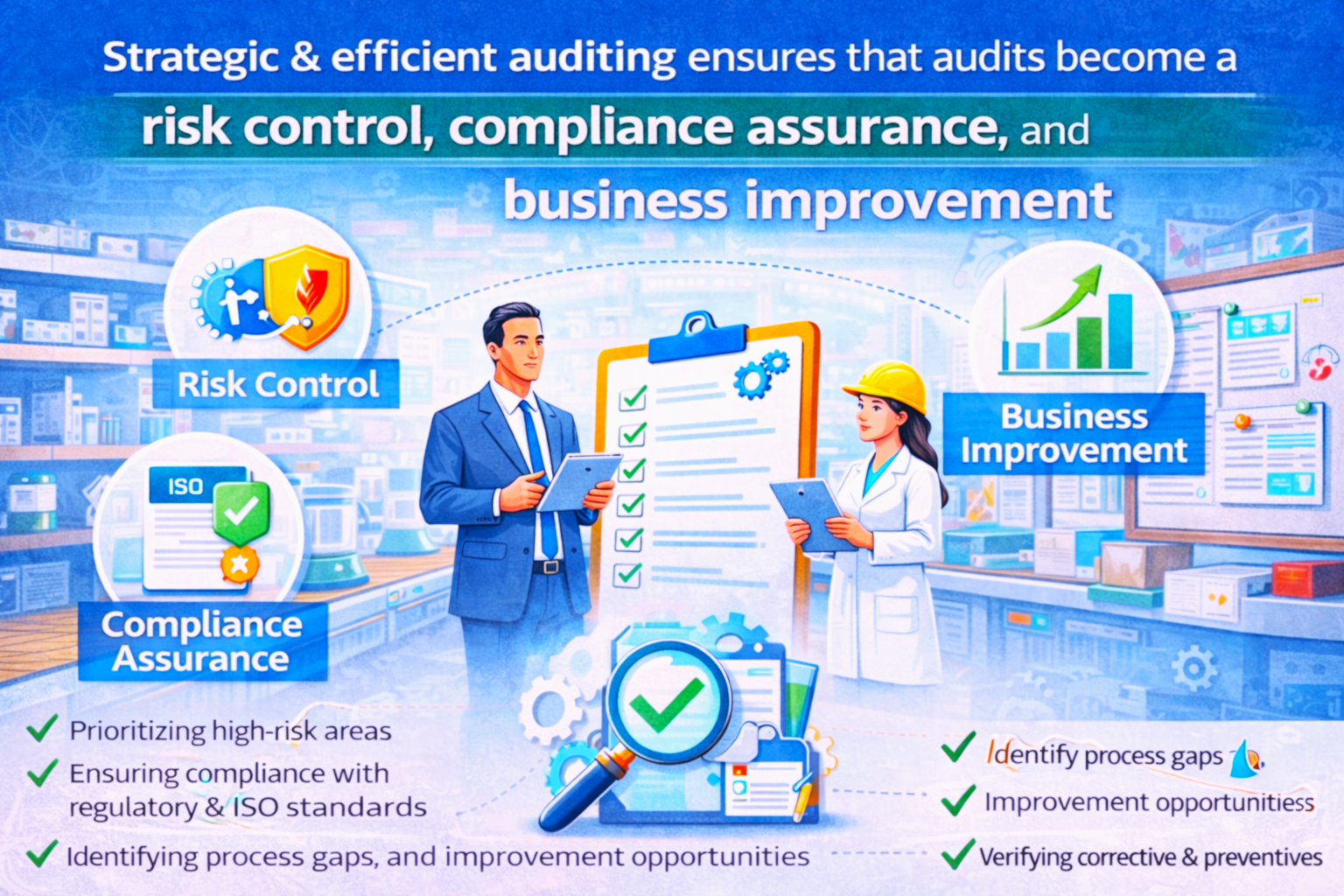
Strategic & Efficient Auditing means conducting audits in a planned, risk-based, and value-driven manner to ensure compliance, improve processes, and strengthen the Quality Management System (QMS).
🔍 What it Means
It focuses on:
- Auditing the right processes at the right time
- Using risk-based thinking to prioritize critical areas
- Ensuring audits add business value, not just compliance
🎯 Key Objectives
- Ensure compliance with ISO 9001, IATF 16949, GMP, customer & regulatory standards
- Identify process gaps, risks, and improvement opportunities
- Verify effectiveness of corrective and preventive actions
- Strengthen overall process control and consistency
⚙ How Strategic Audit Planning Works
- Risk-Based Audit Planning
- Focus on high-risk processes (production, inspection, suppliers, change management)
- Prioritize customer complaints, defects, and recurring issues
- Defined Audit Scope & Objectives
- Process-based audit approach (not only department-based)
- Clear audit criteria and standards
- Qualified Audit Team
- Trained internal auditors
- Cross-functional audit participation
- Efficient Audit Execution
- Process walk-throughs
- Evidence-based verification
- Interview + record +现场 inspection
- Clear Reporting
- Findings categorized (Major / Minor / Observation)
- Root cause requirement for non-conformities
- Follow-up & Effectiveness Verification
- Corrective action tracking
- Closure validation
✅ Benefits
- Prevents quality escapes and compliance failures
- Improves process discipline and accountability
- Reduces customer complaints and audit findings
- Strengthens certification readiness
- Builds continuous improvement culture