


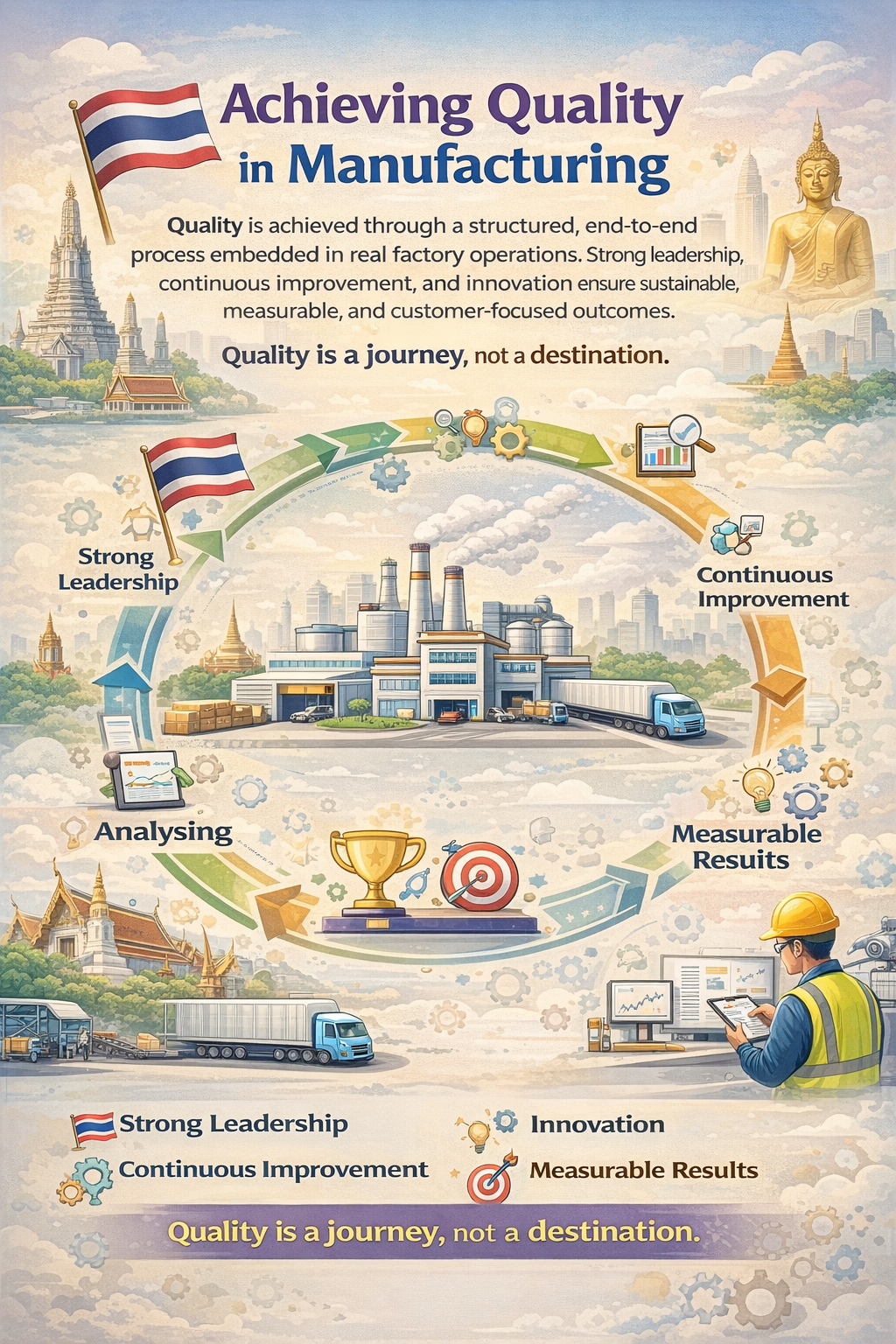
Quality is not the responsibility of a single department—it is the outcome of many interconnected activities working together toward one common goal. The following pillars explain how organizations systematically build, sustain, and elevate Quality across operations, people, and processes.
1. Leading
Strong leadership inspires a culture where quality is a shared value, not just a target. Leaders set expectations, demonstrate commitment, and influence behaviors that prioritize quality in every decision.
2. Designing
Quality begins at the design stage. Well-designed products and processes embed quality from the start, reducing defects, rework, and risks later in production or service delivery.
3. Planning
Effective planning defines quality objectives, standards, and pathways. It aligns resources, timelines, and processes to ensure quality goals are realistic, measurable, and achievable.
4. Reporting
Transparent reporting provides visibility into quality performance. Accurate data and timely reports help organizations identify gaps, track progress, and make informed decisions.
5. Engaging
Engaged employees are essential for quality excellence. When people are empowered, involved, and accountable, quality becomes part of everyday work—not just a checklist.
6. Training
Training builds the foundation of quality by equipping employees with the right skills, knowledge, and awareness. Competent teams reduce errors and improve consistency.
7. Improving
Continuous improvement drives the journey toward higher quality. By identifying root causes and implementing corrective actions, organizations evolve and strengthen their systems.
8. Auditing
Audits strengthen the quality system by verifying compliance, identifying risks, and ensuring processes follow defined standards. They provide confidence to customers and stakeholders.
9. Benchmarking
Benchmarking raises the bar by comparing performance against industry best practices. It encourages learning, innovation, and competitive improvement.
10. Executing
Execution turns plans into results. Disciplined and consistent execution ensures that quality commitments are delivered as promised.
11. Collaborating
Quality thrives through collaboration. Cross-functional teamwork improves problem-solving, reduces silos, and ensures quality is maintained throughout the value chain.
12. Monitoring
Ongoing monitoring safeguards quality standards. Real-time checks, KPIs, and controls help detect deviations early and prevent failures.
13. Analyzing
Data-driven analysis enables informed decision-making. By studying trends and performance data, organizations can proactively improve quality outcomes.
14. Documenting
Documentation preserves quality knowledge. Clear procedures, records, and standards ensure consistency, traceability, and continuity across teams and time.
15. Innovating
Innovation transforms the future of quality. New technologies, methods, and ideas help organizations enhance efficiency, reliability, and customer satisfaction.