


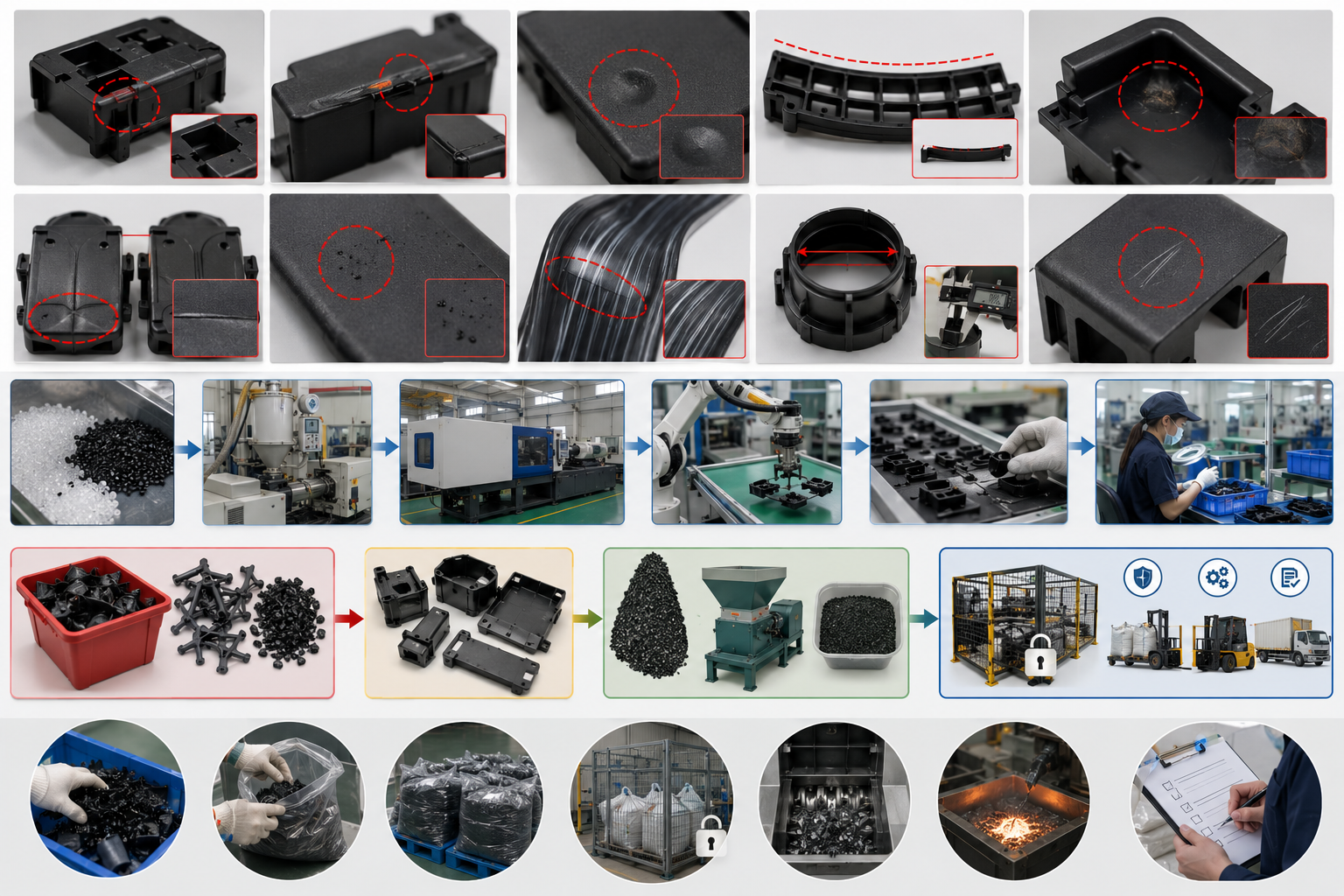
Plastic injection molding is one of the most important manufacturing processes in the automotive industry. It is widely used for producing interior parts, exterior components, connectors, housings, clips, air ducts, and precision engineering plastic parts.
Because automotive parts require high precision, appearance quality, strength, and durability, strict quality control is essential. Any defect or NG (Non-Good) part can affect vehicle safety, assembly performance, and customer satisfaction.
Major NG Areas in Plastic Injection Automotive Parts Manufacturing
1. Short Shot
Short shot occurs when molten plastic does not completely fill the mold cavity.
How It Happens
- Low injection pressure
- Insufficient material
- Poor mold venting
- Low mold temperature
- Blocked gate or runner
- Thin wall design
Common Result
- Incomplete part shape
- Missing corner or edge
- Weak structure
- ความล้มเหลวในการประกอบ (Assembly Failure)
2. Flash Defect
Flash is excess plastic material leaking outside the mold parting line.
How It Happens
- Excessive injection pressure
- Worn mold surface
- Improper mold clamping force
- Mold misalignment
- Damaged mold tooling
Common Result
- Sharp edge on product
- Poor appearance
- Additional trimming process
- Customer rejection
3. Sink Mark
Sink marks appear as small dents or depressions on the plastic surface.
How It Happens
- Uneven wall thickness
- Improper cooling
- Low holding pressure
- Excessive material shrinkage
- Thick rib design
Common Result
- Poor cosmetic appearance
- Surface deformation
- Dimensional instability
Sink marks are especially critical for automotive interior visible parts.
4. Warpage and Deformation
Warpage causes the plastic part to bend or twist after molding.
How It Happens
- Uneven cooling temperature
- Improper mold design
- Residual internal stress
- Material shrinkage variation
- Incorrect cooling cycle
Common Result
- Poor fitting during assembly
- Gap issues
- Dimensional NG
- Functional failure
5. Burn Mark
Burn marks appear as dark or black discoloration on the molded part.
How It Happens
- Trapped gas inside mold
- Excessive injection speed
- Poor mold venting
- Material overheating
Common Result
- Surface appearance defect
- Weak material structure
- Customer complaint
6. Weld Line
Weld lines occur when two flow fronts of molten plastic meet but do not properly fuse.
How It Happens
- Low melt temperature
- Poor gate location
- Slow injection speed
- Complex part geometry
Common Result
- Weak mechanical strength
- Visible line on surface
- Structural crack risk
7. Black Spot and Contamination
Foreign material contamination is a major issue in automotive plastic parts.
How It Happens
- Dirty hopper or machine
- Mixed material
- Burned resin residue
- Dust contamination
- Recycled material impurity
Common Result
- Surface contamination
- Color inconsistency
- Functional defect
- OEM rejection
8. Silver Streak / Moisture Defect
Silver streaks appear as shiny lines on plastic surfaces.
How It Happens
- Moisture in resin material
- Improper drying condition
- Wet recycled material
- Excessive material temperature
Common Result
- Poor appearance
- Reduced material strength
- Surface quality failure
Engineering plastics for automotive applications require strict drying control.
9. Dimensional NG
Automotive plastic parts must meet tight dimensional tolerance.
How It Happens
- Mold wear
- Temperature instability
- Material shrinkage variation
- Machine setting fluctuation
- Poor process control
Common Result
- Assembly interference
- Gap mismatch
- Functional failure
- Production line stoppage
10. Surface Appearance Defect
Appearance quality is critical for visible automotive components.
Common NG Types
- Scratch
- Dent
- Flow mark
- Gloss variation
- Color variation
How It Happens
- Poor handling
- Improper packing
- Mold surface damage
- Incorrect molding parameter
- Material contamination
Common Result
- Customer claim
- Rework or scrap
- Rejection during final inspection
Major Scrap Sources in Plastic Injection Manufacturing
| Production Area | Typical NG / Scrap |
|---|---|
| Material Feeding | Moisture contamination |
| Injection Molding | Short shot, flash |
| Cooling Process | Warpage |
| Mold Tooling | Dimensional NG |
| Surface Inspection | Scratch, burn mark |
| Assembly Process | Misfit parts |
| Printing / Painting | Color defect |
| Final Inspection | Appearance NG |
How Factories Separate NG and Waste According to BOI Scrap Regulation
Factories operating under Thailand BOI (Board of Investment) privileges must carefully control all production scrap, rejected materials, and defective products because imported raw materials may receive tax exemption benefits.
Proper scrap segregation and traceability are mandatory for BOI compliance.
Types of Scrap Classification
1. Plastic Production Scrap
Generated during normal production process.
ตัวอย่าง:
- Runner scrap
- Sprue scrap
- Flash trimming
- Start-up purge material
2. NG Product Scrap
Defective molded parts rejected during inspection.
ตัวอย่าง:
- Warped automotive panel
- Cracked housing
- Burn mark defect
- Dimensional NG connector
3. Raw Material Scrap
Unused or contaminated resin materials.
ตัวอย่าง:
- Moisture-damaged resin
- Expired engineering plastic
- Contaminated pellets
- Mixed resin material
BOI Scrap Separation Process
Step 1 — Identification and Tagging
Factories identify:
- BOI material
- Non-BOI material
- Reusable scrap
- Non-reusable NG products
Each scrap lot receives:
- Scrap label
- Defect description
- Lot traceability
- Weight record
- Process source
Step 2 — Segregated Storage Area
Factories establish dedicated areas for:
- สินค้าที่ไม่ผ่านคุณภาพ (NG Products)
- Plastic runners
- Regrind material
- Destroyed scrap
- BOI-controlled waste
BOI scrap must not mix with local materials.
Step 3 — Scrap Recording and Monitoring
Factories maintain records including:
- Material type
- Resin grade
- Quantity and weight
- Production line source
- Defect cause
- Scrap destination
Step 4 — Inspection and Verification
Authorized inspection companies verify:
- Actual scrap quantity
- Scrap condition
- Destruction process
- BOI compliance evidence
Companies such as Advantage Co., Ltd. provide BOI Scrap Inspection services and certification support in Thailand.
Step 5 — Destruction or Recycling
Common disposal methods include:
- Crushing
- Shredding
- Regrinding
- Melting
- Authorized recycling
Non-reusable automotive NG parts are often physically destroyed to prevent re-use.
Step 6 — Certificate Issuance
Inspection companies issue:
- Scrap inspection certificate
- Weight verification report
- Destruction evidence
- Photo documentation
These documents support BOI audit and material balance reconciliation.
Best Practices to Reduce NG in Plastic Injection Manufacturing
Process Control
- Scientific molding control
- Injection parameter monitoring
- Mold temperature management
- SPC quality monitoring
Material Control
- Resin drying system
- FIFO material management
- Incoming material inspection
- Moisture monitoring
Mold Maintenance
- Preventive mold maintenance
- Mold cleaning
- Venting inspection
- Tool wear monitoring
Automation
- Robotic part handling
- Vision inspection system
- Automated leak and dimension inspection
- Traceability barcode system
Scrap Management
- Real-time scrap analysis
- Root cause investigation
- NG trend monitoring
- BOI material tracking system