


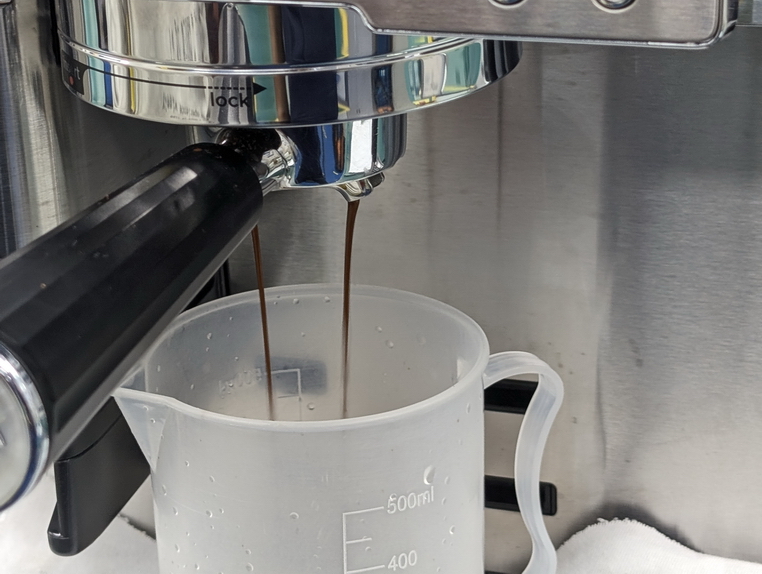
Performance testing ensures that every coffee machine consistently delivers optimal brewing quality, efficiency, and reliability under normal operating conditions. The following tests verify that the product meets both customer expectations and regulatory requirements in Thailand.
1️⃣ Brewing Temperature Consistency Test (85–96°C)
Proper extraction of coffee requires water temperature between 85°C and 96°C.
Purpose:
To confirm the heating system maintains stable and accurate brewing temperature throughout the brewing cycle.
Test Method:
- Measure water temperature at the outlet during brewing using calibrated thermocouples or digital temperature probes.
- Conduct multiple brewing cycles to evaluate stability.
- Record temperature fluctuation range.
Acceptance Criteria:
- Temperature must remain within specified range.
- Variation should typically not exceed ±2°C during extraction.
Importance:
Inconsistent temperature leads to under-extraction (weak coffee) or over-extraction (bitter taste).
2️⃣ Pressure Performance Test (Espresso Machines – Approx. 9 Bar)
Espresso extraction requires high pressure to produce proper crema and flavor balance.
Purpose:
To verify that the pump system generates and maintains optimal brewing pressure (around 9 bar).
Test Method:
- Install calibrated pressure gauge at brew head.
- Run extraction cycle under load (with coffee puck simulation).
- Monitor pressure build-up and stability.
Acceptance Criteria:
- Pressure should reach approximately 8–10 bar during extraction.
- Pressure drop should remain minimal throughout brewing.
Importance:
Incorrect pressure results in poor crema, weak extraction, or mechanical stress on components.
3️⃣ Water Flow Rate Test
Flow rate directly impacts extraction time and coffee quality.
Purpose:
To confirm the machine dispenses water at the correct rate under normal operation.
Test Method:
- Measure volume output over a fixed time (e.g., ml/sec).
- Test under both idle and brewing conditions.
- Compare results with design specifications.
Acceptance Criteria:
- Flow rate must fall within defined specification tolerance.
- No irregular pulsation or unstable output.
Importance:
Excessive flow causes weak coffee; insufficient flow leads to over-extraction and bitterness.
4️⃣ Brewing Cycle Repeatability Test
Consistency is critical for consumer satisfaction.
Purpose:
To ensure identical brewing performance across multiple cycles.
Test Method:
- Conduct repeated brewing cycles (e.g., 20–50 consecutive cycles).
- Measure temperature, pressure, extraction time, and output volume.
- Record deviation between cycles.
Acceptance Criteria:
- Variation between cycles should remain within defined tolerance limits.
- No performance degradation over continuous use.
Importance:
Guarantees stable product performance in both household and commercial applications.
5️⃣ Power Consumption Measurement
Energy efficiency is important for regulatory compliance and consumer cost control.
Purpose:
To verify electrical power consumption during standby, heating, and brewing modes.
Test Method:
- Measure wattage using calibrated power analyzer.
- Record peak power during heating phase.
- Measure standby power consumption.
Acceptance Criteria:
- Must comply with declared rated power.
- Standby power should meet energy efficiency guidelines.
In Thailand, energy performance labeling may align with requirements from the Thai Industrial Standards Institute where applicable.