


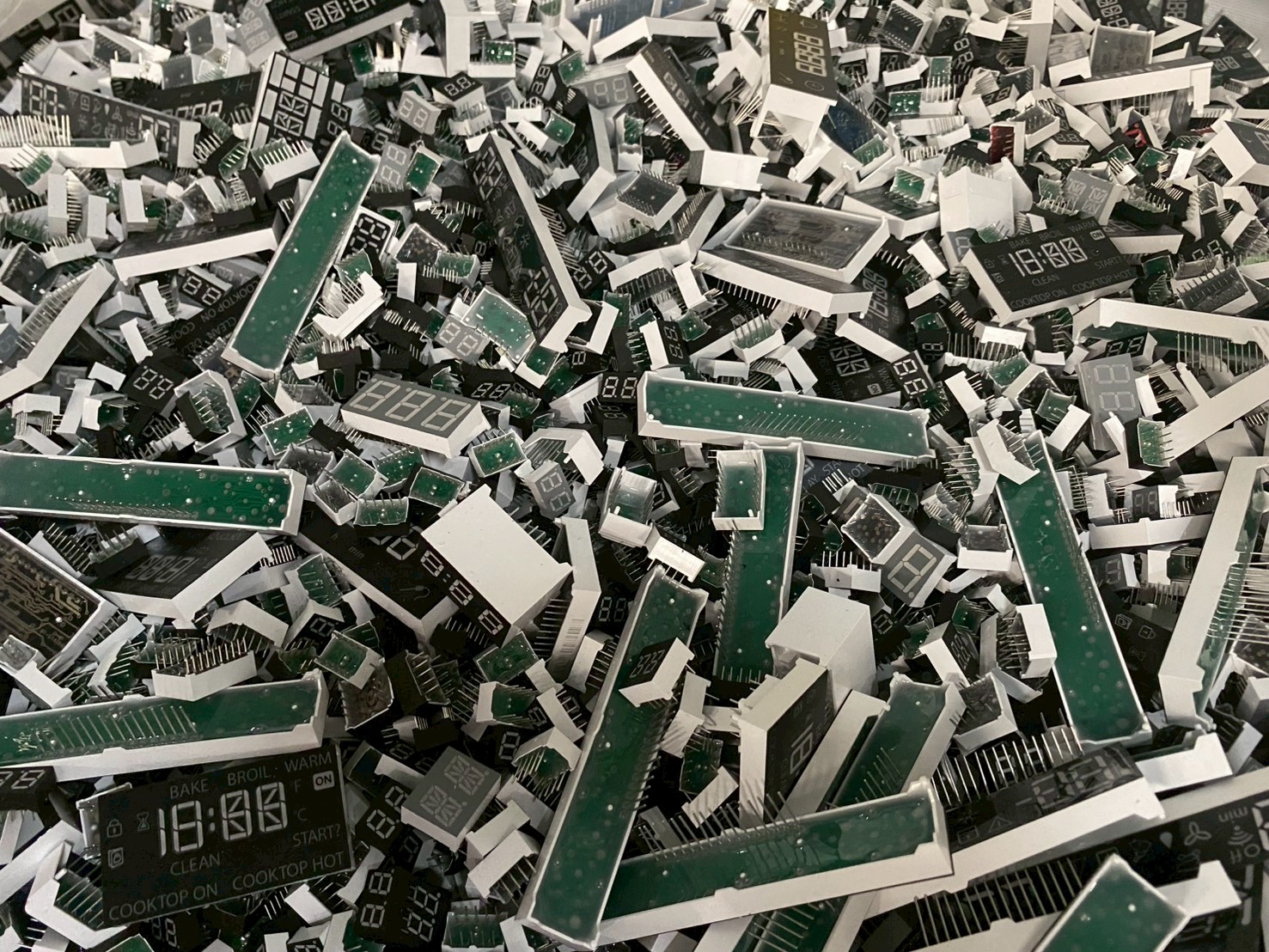
PCBA scrap is not just inert plastic and metal. It is a complex mixture that falls under the category of “e-waste” or “Waste Electrical and Electronic Equipment (WEEE)”. The key reasons for control are:
- Hazardous Constituents: PCBs contain:
- Heavy Metals: Lead (in solder, especially in older assemblies), cadmium, mercury (in some components).
- Halogenated Compounds: Brominated Flame Retardants (BFRs) in the substrate.
- Other hazardous substances: Beryllium, arsenic in trace amounts.
These can leach into soil and groundwater if landfilled or be released as toxic fumes if incinerated improperly.
- High-Value Materials: They also contain:
- Precious Metals: Gold, silver, palladium (in ICs, connectors, plating).
- Base Metals: High-grade copper, tin, nickel.
This economic value drives a legitimate recycling industry but also creates the risk of illicit handling and “leakage” to informal, polluting recycling sectors.
- Data Security Risk: Assembled boards may contain memory chips (EEPROM, Flash) storing sensitive company data, IP, or even personal data. Uncontrolled disposal is a severe security breach.
- International Regulations: Sri Lanka, as a party to the Basel Convention on the Control of Transboundary Movements of Hazardous Wastes, is obligated to control the export/import of hazardous e-waste. BOI Scrap Inspectors act as a frontline enforcement mechanism for this.