


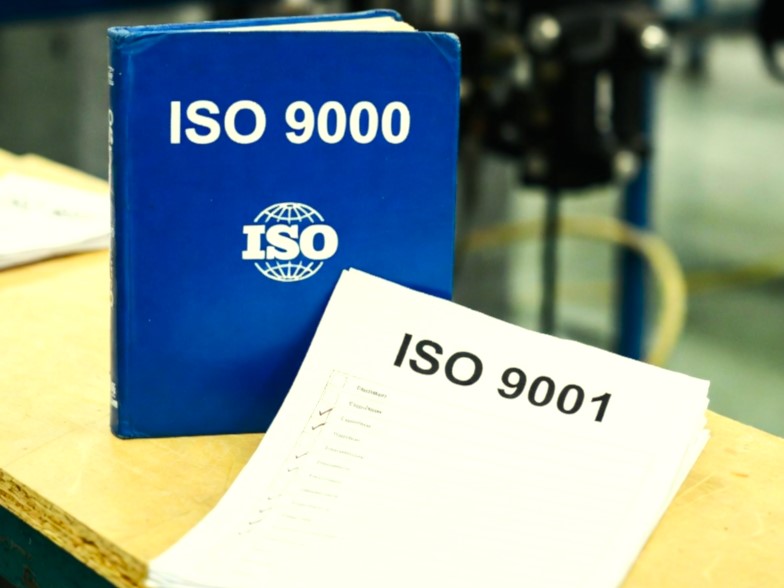
In quality management, ISO 9000 and ISO 9001 are often mentioned together, yet they play distinct roles. ISO 9000 provides the foundational concepts, terminology, and principles of a Quality Management System (QMS). In contrast, ISO 9001 delivers the specific, auditable requirements that organizations must follow to build, implement, and certify a QMS.
Think of ISO 9000 as the comprehensive guidebook that explains the “why” behind quality practices, while ISO 9001 serves as the practical checklist that turns those principles into measurable, certifiable results. This clear comparison helps businesses—especially manufacturers—decide how to approach quality improvement effectively.
Understanding the ISO 9000 Family
The International Organization for Standardization (ISO) creates internationally recognized standards that promote consistency in quality, safety, and efficiency. The ISO 9000 family focuses specifically on quality management and includes several standards:
- ISO 9000 (fundamentals and vocabulary)
- ISO 9001 (requirements)
- ISO 9004 (guidance for sustained success)
These standards apply across manufacturing, services, technology, and other sectors, helping organizations earn customer trust, streamline operations, and meet regulatory expectations.
What Is ISO 9000?
ISO 9000 is the foundational standard in the family. It cannot be certified, but it equips organizations with the essential knowledge needed before implementing a QMS.
Core Purpose
- Defines key quality terms (e.g., quality, process, nonconformity, corrective action, continual improvement).
- Introduces the seven quality management principles: customer focus, leadership, engagement of people, process approach, improvement, evidence-based decision making, and relationship management.
- Serves as a reference framework that explains the rationale behind every quality process.
Key Features
- Common terminology that aligns departments and reduces confusion.
- Educational resource ideal for staff training and building a quality culture.
- Provides the “why” that prepares teams for successful ISO 9001 implementation.
Certification Note: ISO 9000 is informational only—no formal certification is possible.
Practical Example A manufacturing team might study ISO 9000 to understand what constitutes a nonconformity or why a process-based approach matters. This shared understanding makes later ISO 9001 implementation smoother and more effective.
What Is ISO 9001?
ISO 9001 is the certifiable standard. It translates the concepts from ISO 9000 into actionable requirements that organizations can implement, audit, and certify.
Core Purpose
- Establishes a structured QMS to control processes and ensure consistent output.
- Drives continual improvement through monitoring, measurement, and risk-based thinking.
- Enables third-party certification that demonstrates commitment to quality and customer satisfaction.
Key Features
- Organized into Clauses 1–10 that specify exact requirements.
- Emphasizes a process approach, risk-based thinking, performance evaluation, and internal audits.
- Focuses on real-world results: fewer defects, better efficiency, and stronger customer relationships.
Certification Note: Organizations undergo an external audit by an accredited body to achieve and maintain ISO 9001 certification.
Practical Example A component manufacturer using ISO 9001 would create standardized work instructions, track key performance indicators (scrap rate, on-time delivery), conduct regular audits, and implement corrective actions—resulting in measurable improvements and formal certification.
Key Differences Between ISO 9000 and ISO 9001
| Feature | ISO 9000 | ISO 9001 |
| Purpose | Defines concepts, terminology, and principles | Specifies certifiable requirements for a QMS |
| Certifiable | No | Yes |
| Focus | Understanding the “why” of quality | Operational implementation and improvement |
| Structure | Principles and vocabulary | Clauses 1–10 with specific requirements |
| Usage | Training, reference, and foundation | Certification, audits, and process control |
| Outcome | Knowledge and awareness | Certified QMS with proven performance |
Simple Takeaway: ISO 9000 answers “why quality matters”; ISO 9001 shows “how to achieve and prove it.”
How ISO 9000 Supports ISO 9001
The two standards work together seamlessly:
- ISO 9000 builds understanding of terminology and principles.
- This foundation makes ISO 9001 implementation faster, clearer, and more sustainable.
- Teams trained on ISO 9000 speak the same “quality language,” reducing errors during rollout.
Practical Tip: Start with ISO 9000 awareness training before launching full ISO 9001 projects. This approach ensures buy-in and long-term success.
Benefits of ISO 9001 Certification
ISO 9001 certification delivers tangible advantages beyond compliance:
- Consistent Quality – Standardized processes reduce defects and variability.
- Higher Customer Satisfaction – Proven reliability builds trust and repeat business.
- Greater Efficiency – Streamlined operations cut waste and optimize resources.
- Better Risk Management – Proactive identification of risks prevents costly issues.
- Competitive Edge – Global recognition opens new markets and supplier opportunities.
- Culture of Continual Improvement – Regular audits and reviews drive ongoing enhancements.
Manufacturer Example: Many companies report 25–30% reductions in scrap and near-perfect on-time delivery after achieving certification.
Step-by-Step Implementation Using ISO 9000 as a Guide
- Learn the Principles (ISO 9000) – Train teams on the seven quality principles.
- Define Context & Scope (Clause 4) – Identify issues, stakeholders, and QMS boundaries.
- Set Policy & Objectives (Clauses 5–6) – Align quality goals with business strategy.
- Provide Resources (Clause 7) – Ensure competent staff, equipment, and documentation.
- Control Operations (Clause 8) – Standardize production, inspection, and suppliers.
- Monitor & Audit (Clause 9) – Track KPIs and perform internal audits.
- Improve Continually (Clause 10) – Address nonconformities and drive enhancements.
Common Misconceptions
- “ISO 9000 is certifiable” → False; it is only a guidance document.
- “ISO 9001 guarantees perfect products” → False; it ensures controlled processes, not perfection.
- “ISO 9001 is only for manufacturers” → False; service, IT, healthcare, and many other sectors benefit.
- “You must implement ISO 9000 first” → Not required, but highly recommended for better understanding.
- “Certification is the end goal” → False; it is the beginning of continual improvement.
- “ISO 9001 is just paperwork” → False; the real focus is effective processes and results.
Choosing the Right Implementation Approach
Successful organizations combine:
- Leadership vision with employee input (top-down + bottom-up).
- Phased rollout starting with critical processes.
- Internal ownership supported by expert guidance when needed.
- Full alignment of the QMS with overall business objectives.
Real-World Manufacturer Success Story
Company: ABC Industrial Components
Challenge: High scrap rates, inconsistent inspections, and customer complaints.
Solution: Trained staff on ISO 9000 principles, then implemented ISO 9001 requirements with risk-based planning and audits.
Results: 25% scrap reduction, 98% on-time delivery, and successful ISO 9001:2015 certification.